
One of the best things I like to do is restore firearms. For me it’s the challenge to take something old and worn and bring it back to life. I have restored several firearms over the years. See the Carolina Gunworks Facebook page, as well as my personal Facebook page to see some of the commissions I have done. I diligently go through each firearm, paying the closest attention to detail. Striving my best to get the firearm to operate safely and look as close to factory new as possible.
For many, restoring or refinishing a firearm may seem somewhat simple. Not so much. There is a lot of labor that goes into the task. The process involves disassembly of the firearm, without loosing parts, screws, pins or damaging the firearm. Accessing its condition. Clean and polish the parts involved. Replacing that $30 screw or other parts that may be damaged or lost. Then the task of finding parts, if needed. That is actually the hardest part of the job. I have spent hours doing research and looking for parts. Replacement parts may need to be fitted into the firearm. The refinishing part, well, lets say, that it is just plain magic. The furniture, especially wood, has to be addressed. Renditioning wood furniture is a different world onto its own. Then the reassembling of the firearm. That is the best part. Being able hold the hours of work that have come together. Put an “S” on my chest, call me proud.
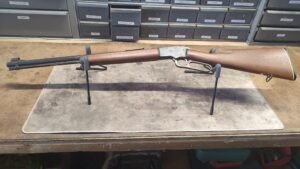
Across the counter is the owner of the firearm. The reason for bringing me their “heirloom” is usually for sentimental value. For what ever the reason, they bring me the firearm to be redone. Here is where the rubber meets the road. The traction here is the budget that is agreed upon. Before anything happens, the firearm has to be “roughly” appraised for current market value. Then there is what the customer is willing to invest into the firearm. The majority of the time the budget is going to exceed the market value. The condition of the firearm can make or break the the deal too. Sometimes Great Grand Dad’s 150 yr. old shotgun may not be able to shoot safely in the end. But it would look good refinished hanging on the wall. That worth is purely on the owner. Then there is the historical or collector value to be considered. For example, a 1873 Colt Single Action Army, first generation. It’s collector value might be more if kept in its original condition. Restoring it would take away from that value. An objective appraisal can advise to that possibility. Once again, it’s worth is up to the owner of the firearm.
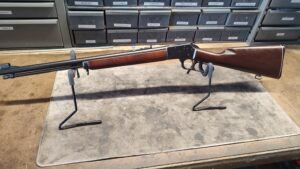
In the end, restoring a firearm is up to the owner. As is the reason too. The cost of the endeavor is what ever the owner thinks it should be. As a Gunsmith, it comes down to what the owner thinks its worth and how much they are willing to invest into that firearm.
Thanks for reading,
Rod Rice
Tell your family, tell your friends, tell your family friends…….
Carolina Gunworks
Your Hero support