
If the reloading press is the “foundation” to reloading, then the dies are the heart of the process. The primary dies are the tooling used with any reloading press. Each stage of the process reflects the component that makes up one round of ammunition.
The process;
- De-capping: De-capping is the removal of the spent/used primer.
- Sizing: Reshaping the cartridge case to chamber specifications.
- Powder Dispensing: A method of dispensing a measure of powder in the cartridge case.
- Case Flare: Flaring the cartridge case mouth to accept a new bullet.
- Bullet Seating: Insertion of the bullet into the cartridge case.
- Crimping: A crimp is done to seal or hold the bullet in place.
Manufactures of reloading dies may compound parts of the process. Such as de-capping and resizing in one step. This is not uncommon. One tool for multiple jobs.
Progressive presses have stages in the tooling to accomplish different points of the reloading process. Primarily there are four stages to a base model progressive press. The higher end presses provide more stages for more versatility. Die placement is limited. It makes sense to have a die do more than one job. Also, the press adds to the process. Such as, primer seating. Which is done with the de-capping/ sizing stage.

De-capping/Sizing
- Universal de-capping dies removes the spent primer. Universal, meaning that this die can be used for removing the spent primer for any caliber without doing any sizing.
- Neck sizing dies are used for bottle necked cases, such as the .223 Rem. This die resizes the neck of the cartridge case only.
- Full length sizing die is the most common. This die will resize the cartridge case to the chamber specifications. This die has a de-capping rod and pin made into it.
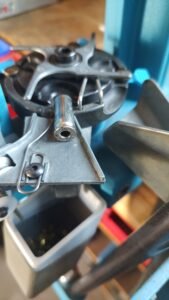
Powder Dispensing;
Powder dispensing is done two ways. Manually or automatically.
- Manually is done by measuring the powder with a scale of some type and then pouring the powder into the cartridge case.
- Automatically is done on a progressive press with a powder measure/hopper that dispenses powder through a die and funnel. Some manufactures use the funnel to flare the case. Once again, multiple jobs to one stage.
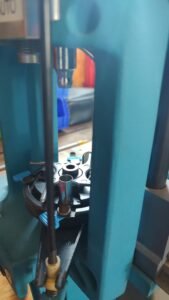
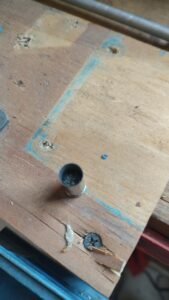
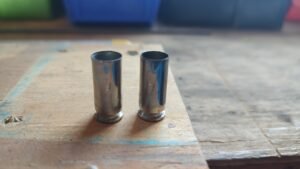
Bullet seating;
Bullet seating is very important. A good reloading manual will give the specifications needed to seat the bullet at the right depth into the cartridge case.
Most seating dies will come with a couple of bullet ogive profile seaters. Ogive is the bullet profile, such as round nose, flat nose, wad cutter etc.
Some manufactures seating dies will also crimp at this stage.
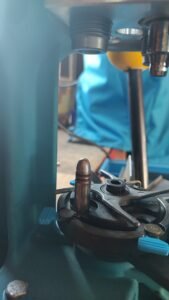
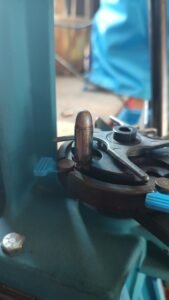
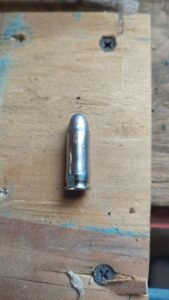
Crimping;
A crimping die inverts the flare to the inside, crimping the bullet to the case. This seals and holds the bullet in place.
Crimping is not always necessary. In some cases, crimping is just not done. So, when to crimp and not?
- Most pistol calibers are crimped. Either a rolled crimp or a tapper crimp is used. Rolled crimp is used on revolver calibers, such as 45 long Colt. A tapered crimp is used on jacketed and semi auto calibers, such as 9mm. Any lead bullet should be crimped.
- Rifle calibers may or may not be crimped. Auto feeding calibers are crimped. Military cartridges are crimped for durability and storage. Some commercial calibers may have a slight or mild crimp to hold the bullet in spec and for storage.
Die Manufactures;
When it comes to dies, it’s not cheap. Todays prices reach over a $100 per a set of dies. New or used, it can get expensive. “Cheap” is not the answer. Aluminum dies with steel inserts are cheap, such as Lee. A good set of carbon steel or tool steel dies are the best, such as RSBS and Dillon. Everything else falls in the middle, such as Lyman, Redding, Hornady, etc. When it comes to dies, durability and tolerances will last a life time. A good warranty helps too.
That is the basics of reloading dies. It can get more complicated, but if your starting out with little or no help, this might clear some questions. We have an experienced firearms trainer here at Carolina Gunworks. He would be more than happy to help in your questions. As always, ask or comment.
Thank you,
Rod Rice
Carolina Gunworks LLC